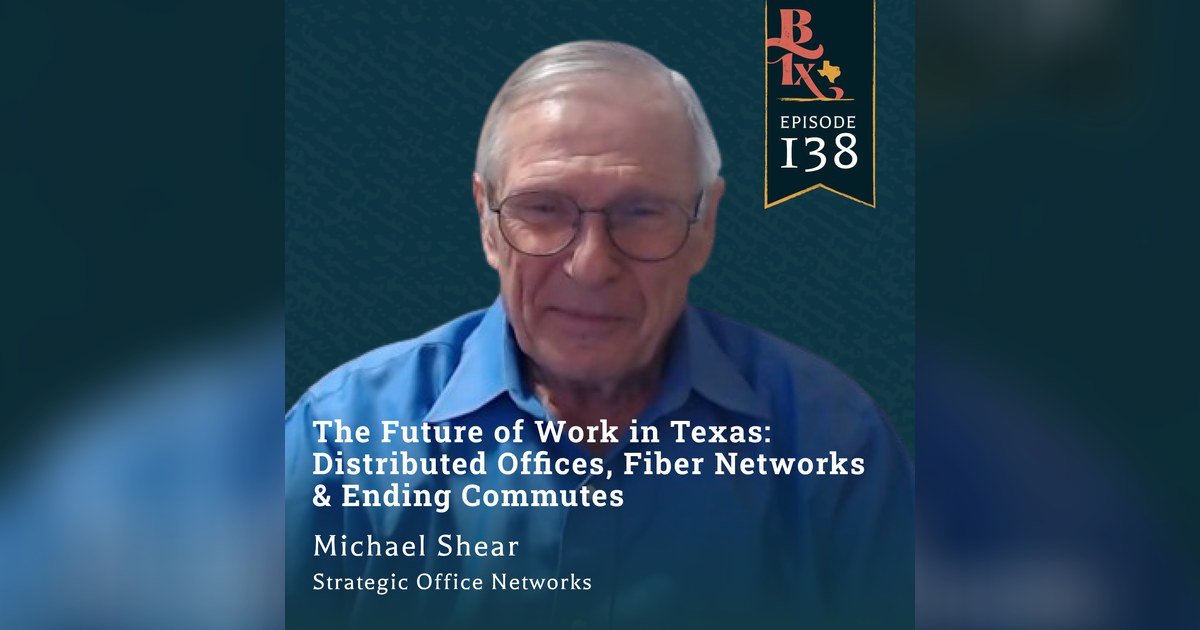
In a recent episode of The Building Texas Show, strategist Michael Shear proposed a radical shift in office infrastructure to tackle Austin's mounting commute crisis. Shear, leader of Strategic Office Networks, argues that replacing a single 60-floor downtown tower with ten six-floor buildings in suburbs like Cedar Park and Luling could alleviate congestion on I-35 and improve housing affordability. The episode, titled 'The Future of Work in Texas: Distributed Offices, Fiber Networks & Ending Commutes,' aired on March 9, 2026, and features host Justin McKenzie.
Shear emphasizes that the next 12 to 24 months are critical for Texas planners, as infrastructure decisions made now will define commuting, housing, and resilience for the next 100 years. He advocates for a regional fiber backbone and edge computing to support distributed workforces, particularly for hospitals, universities, chip manufacturers, and emergency dispatch. 'We've essentially entombed ourselves in a 20th century model, and now we're looking at how do we break through that into another dimension,' Shear told McKenzie.
The discussion connects workforce strategy to public safety and economic resilience. Shear notes that 22% of land in 316 U.S. metro areas is paved, referencing the 2026 book 'Overbuilt: The High Cost and Low Rewards of US Highways.' He warns that regions cannot build their way out of growth, echoing warnings from the Texas Transportation Institute. Shear also highlights Central Texas assets—state government, R&D universities, military complexes, and semiconductor fabs—as both competitive advantages and high-value targets.
Shear points to generational economic shifts: where a 30-year career once matched a 30-year mortgage, today's three-to-five-year job tenures put homebuying at risk. He argues that networked hubs could let workers change employers without changing communities. He also previews emerging technologies, such as extended reality (XR), spatial acoustics, and haptic tools, which could become mainstream within three to five years, referencing a recent Christmas parade live portal linking a Texas town to Ireland. Shear confirms that Google Fiber crews were laying new lines outside his home during the week of taping, signaling ongoing infrastructure investments.
The episode underscores the urgency of rethinking urban planning in Texas, as explosive growth strains existing systems. Shear's Project ION envisions a structural transition beyond remote work debates, aiming to harden communities against climate events, accidents, and geopolitical risks along the I-35 corridor. The full episode is available on YouTube and podcast platforms.