For dual-career couples considering a move to Washington, D.C., the decision of where to live often hinges on two factors: where each partner works and how they will commute. According to Daryl Judy, an Associate Broker with Washington Fine Properties, the region's economy is deep and varied enough to support both careers, making it easier for households to find a single address that works for everyone.
Judy, who helps buyers navigate D.C., Northern Virginia, and Montgomery County, notes that people rarely move for one reason alone. They come because the job and the place both work. The region's employment base extends well beyond federal government, encompassing lobbying, law, biotech, and technology. This diversity attracts major employers like Amazon, which chose Arlington for its second headquarters after assessing the local talent pool.
For dual-career couples, the process starts with both jobs and both commutes. When an employer recruits someone to the region, the spouse or partner typically needs meaningful work as well. Judy explains that employers are aware of this: "I want my employee to come. I need a place for my spouse, my partner to also be employed." A region with law, technology, biotech, government, and supporting businesses makes that easier to offer.
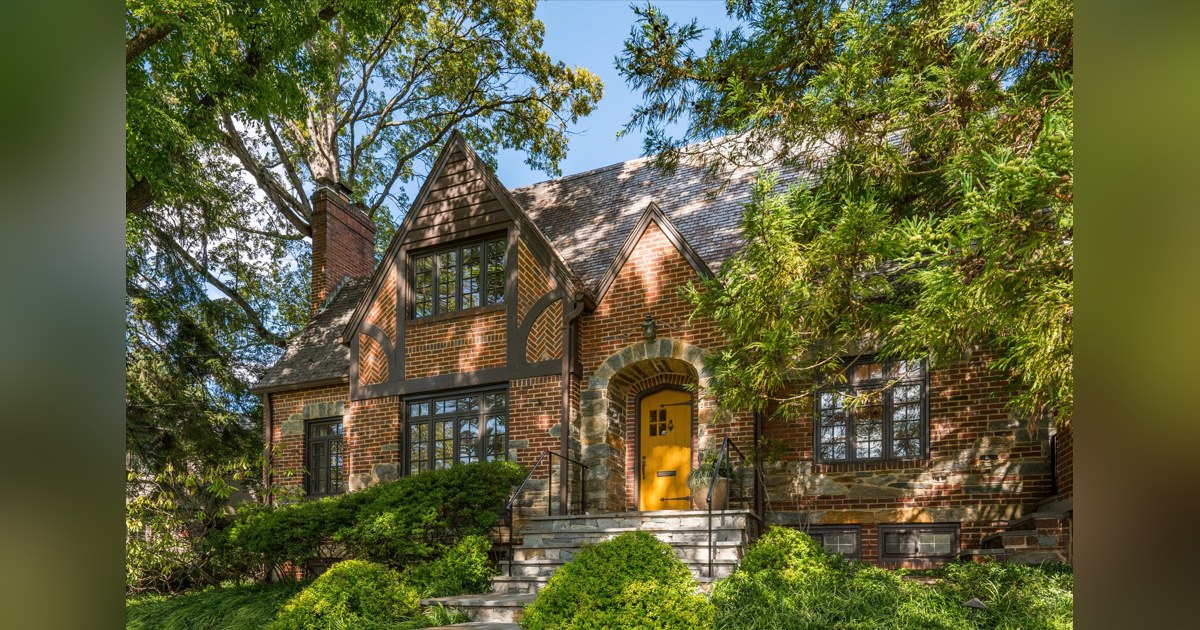
Once settled, two careers shape the map. Judy describes parts of Northwest D.C., including AU Park, as working like a hub and spoke: one partner might commute to Bethesda while the other heads downtown or across the river to Virginia, all from the same address. These neighborhoods offer detached houses with yards, driveways, and garages while staying close to offices, ballgames, and concerts. "We call them city burbs," Judy says, "because it's in the city, but it feels like a suburb."
Living in Washington, D.C. means having the amenities of a major city alongside a livability that keeps people in the region long after the job that brought them. Judy points to a city laid out by Pierre L'Enfant, a skyline without skyscrapers, extensive parkland, three airports, a working metro system, a strong food scene, and professional sports, with both the beach and the mountains within easy reach. For him, that combination turns a job offer into a long-term move. "This is a great job," he says, "and you get to live here."
Buyers find the right community by looking for people who share their interests and way of life, which Judy calls PLU, for "people like us." The size and variety of the region mean that most interests already have a home somewhere within it. "It doesn't make a difference whether knitting is your thing or mahjong or Mandarin classes," he says. "All those things exist here."
When choosing between D.C., Maryland, and Northern Virginia, buyers should weigh where each adult works, how far each is willing to commute, and which community best fits the way they want to live. Each jurisdiction has its own character, and having three to choose from gives a household more ways to match one address to two careers and a shared lifestyle.
Buyers stay because the region offers both career depth and everyday quality of life, a combination that remains its strongest draw as employers continue to weigh where talent wants to live. "D.C. is a place that people want to live," Judy says. "It's a big urban city with lots going on, and it's very livable."
For those working with Daryl Judy, the takeaway is clear: in a region built for two careers, the right home is one that balances both commutes and a shared lifestyle.