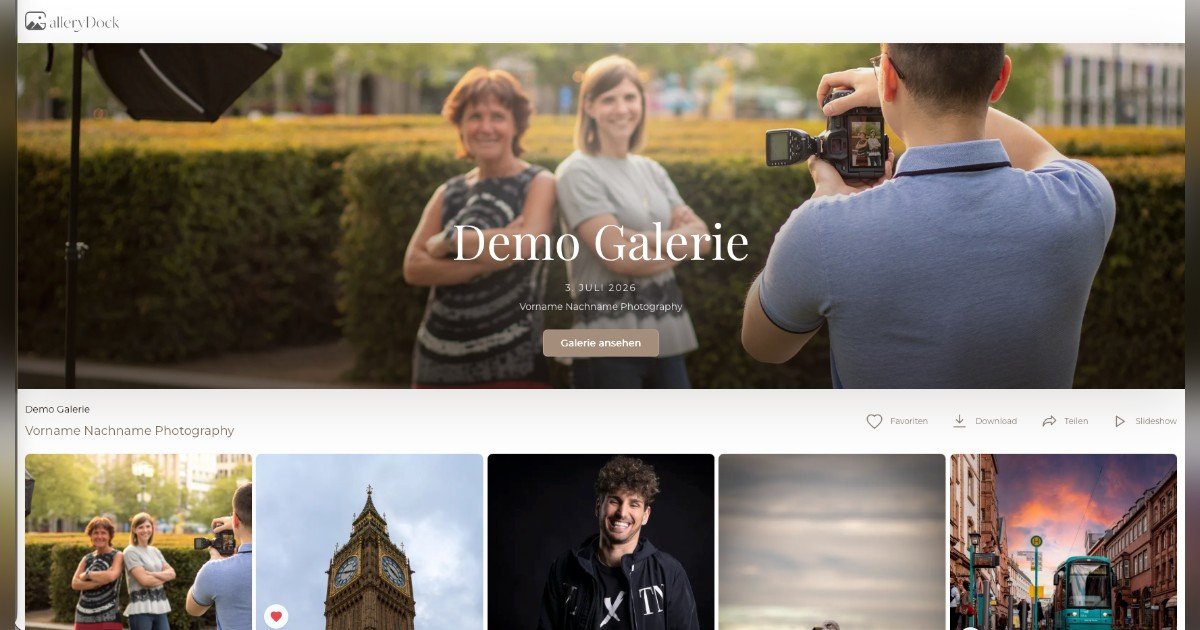
GalleryDock, the online client gallery software based in Hannover, Germany, has announced that its website embedding feature is now available to international users. The expansion, effective October 4, 2026, allows photographers outside Germany to embed client galleries directly into their existing websites using a supplied embed code. This development matters because it addresses a persistent fragmentation in photographers' online workflows: the separation between showcasing a portfolio and delivering final images to clients.
Previously, photographers often had to direct clients to a third-party platform to view and select photos, which could disrupt the client experience and dilute the photographer's brand. With GalleryDock's embedding capability, photographers can create a collection within the platform and then copy its embed code into any compatible page on their own website. This means clients can review, select, and download images without leaving the photographer's site, provided the website builder supports embedded content. Support depends on the specific website builder and its configuration, so photographers should verify compatibility before relying on the feature.
The implications for professional photographers are significant. By keeping client galleries within their own digital domain, photographers can maintain a consistent visual identity and reduce friction for clients. This can lead to faster approvals, higher satisfaction, and potentially more repeat business. Edmond Rätzel, founder of GalleryDock, emphasized this point: "Photographers put care into every image they create. Delivering those images should reflect that same care, with client galleries that feel like a natural part of their own website." The move also positions GalleryDock as a more integrated solution in a crowded market of client gallery tools.
GalleryDock's platform already offers robust features for client review and photo delivery, including password protection for private collections and image downloads. For projects involving video, the software supports feedback tied to specific moments, allowing filmmakers to connect client comments directly to relevant parts of a project. These tools collectively help photographers and filmmakers organize their post-production workflow and give clients a dedicated space to engage with the work.
To encourage adoption, GalleryDock provides a free starting allowance that includes three galleries and 1 GB of storage. This allows photographers to test the gallery workflow before committing to a paid plan. Additionally, an optional print shop is available for selling photographic prints, with shop fees separate from the free account allowance. The international embedding release follows the launch of GalleryDock's English-language platform on September 24, 2026, and the software is available in both English and German.
For international photographers seeking to streamline their client delivery process, this expansion could be a compelling reason to consider GalleryDock as their gallery solution. By bridging the gap between portfolio and delivery, the company is addressing a real pain point in the creative workflow, potentially setting a new standard for how photographers present and share their work online.