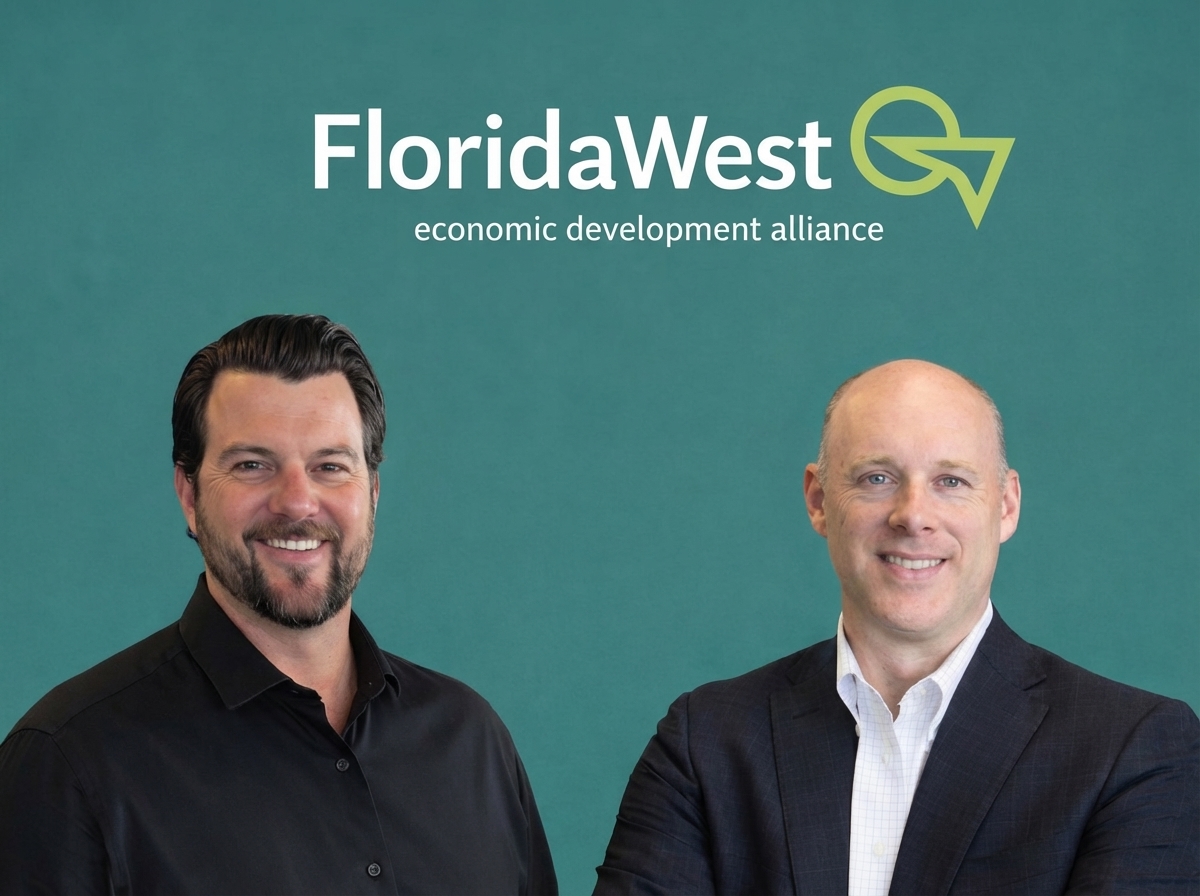
Chris Platé, CEO of Florida West Economic Development Alliance, is executing a targeted strategy to position Pensacola and Escambia County as a hub for aerospace, maritime, and defense industries. In a recent podcast interview, Platé detailed the region’s competitive advantages, site inventory, and infrastructure priorities that commercial real estate professionals and developers should understand.
Platé, who has overseen over 7,000 manufacturing jobs and $5 billion in capital investment in previous roles, emphasized that economic development today is data-driven and requires immediate readiness. “It’s not fluff like it used to be 20, 30 years ago,” he said. Companies cast wide nets across multiple states, demanding accurate data and shovel-ready sites. Political engagement comes last; developers must have answers ready on power, construction timelines, and workforce availability.
Escambia County’s current site inventory includes several key properties. The 9-acre Pensacola Technology Campus downtown offers 12-15 megawatts of power, suitable for multi-story buildings and small data centers. Midtown Industrial Park, a former brownfield, is nearly shovel-ready. Central Commerce Park, with 230 developable acres between I-10 and I-65, is undergoing site planning to maximize density. “That is a very unique gift to have that land sitting there between two interstates,” Platé noted. Outlying Field 8, a former Navy training field, offers 165 acres of Class A park space, and The Bluffs provides barge access for maritime operations.
Recent wins include Field International, an aerospace MRO supplier that relocated its global headquarters from the UK to Pensacola, drawn by the community’s family-focused culture. Platé stressed selectivity: unlike struggling markets, Escambia County can prioritize companies that enhance community character while delivering high-wage jobs.
When asked about infrastructure priorities, Platé identified heavy infrastructure for Central Commerce Park as critical. Energy capacity also remains vital; while the region isn’t pursuing mega data centers, even smaller $200 million projects require planning with Florida Power & Light.
The maritime sector is gaining momentum with Project Maeve, a manufacturing initiative at the Port of Pensacola potentially bringing 2,000 jobs. “You bring in the mama pig and all the little piglets come with it,” Platé said, referring to the supply chain development that follows anchor projects. Maritime’s reliance on skilled welding aligns with existing workforce training capacity in Northwest Florida.
Platé also revealed a “very strong life science project” under consideration for Tech Park, which could anchor the connection between the former Florida Power building and the Institute for Human and Machine Cognition. Additional aerospace projects and local energy diversification are in the pipeline.
For developers and investors, Platé’s strategic focus on four clusters—aerospace, medical, maritime, and cyber/defense—along with emphasis on site readiness and selective recruitment, signals a maturing market with clear advantages. Listen to the full conversation on Beyond the Build.