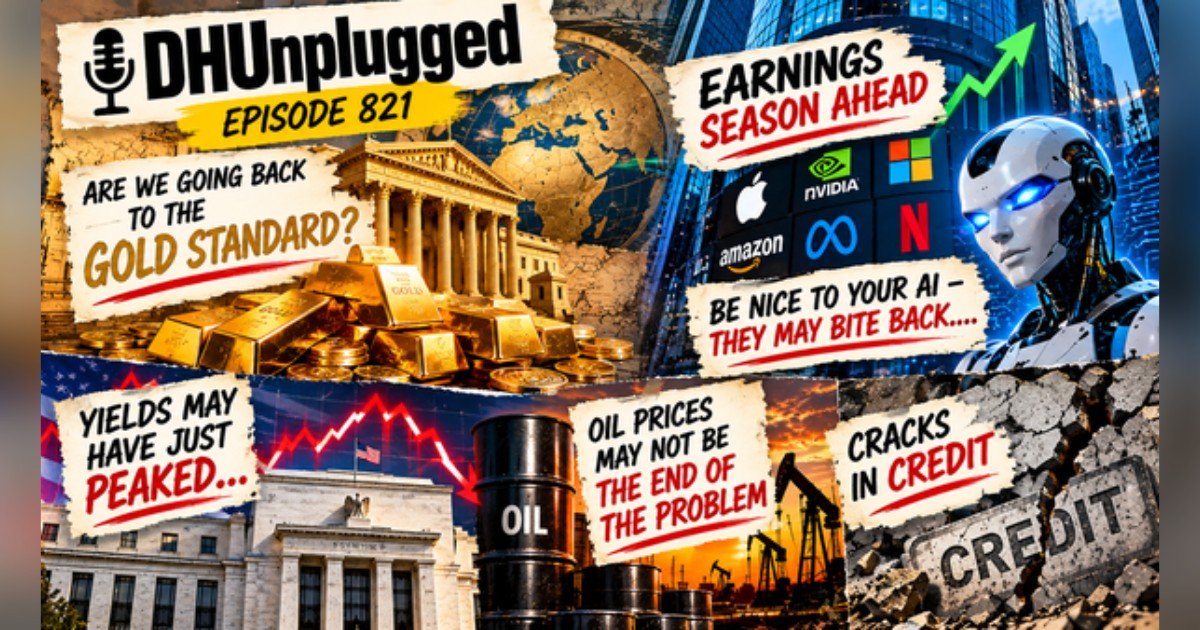
The appointment of Judy Shelton as a counselor to Treasury Secretary Scott Bessant has thrust revived gold-standard chatter into the center of market debate, raising questions about the direction of U.S. monetary policy at a time when credit markets are already flashing warning signs. In the latest episode of DH Unplugged, titled Gold Standard Ahead, hosts Andrew Horowitz and John C. Dvorak dissect the implications of Shelton's new role alongside a dense docket of market developments that collectively suggest growing stress beneath the surface of the financial system.
The significance of Shelton's position lies in her long-standing advocacy for linking the dollar to gold, a view that, if elevated within Treasury, could unsettle assumptions about the Federal Reserve's independence and the durability of current rate policy. The hosts frame the move as part of a broader pattern of policy theater, with Dvorak arguing the administration is in what he calls the twilight of the optics game, where messaging substitutes for substance. For investors, the risk is that such rhetoric, even if not immediately actionable, distorts expectations around inflation, interest rates and the dollar's role as a reserve currency.
Those concerns are amplified by concrete evidence of credit market deterioration. High-yield bond yields climbed from 7.22% to 8.1% in a month, and CCC spreads blew out by roughly 1,250 basis points, a move that typically signals rising default anxiety among the weakest borrowers. The hosts also note that JPMorgan, Goldman Sachs, Citigroup and Wells Fargo kicked off earnings season, while Bank of America was hit by a reported $1.5 billion money-laundering fine on the eve of its print, a reminder that regulatory and reputational risks remain live for the largest institutions.
Horowitz directs a blunt warning at Treasury's efforts to cap long-end yields and possibly scrap 20-year auctions, saying, Scott Bessant, if you're listening, because I know you are, I know you're listening, it's maybe late in the show, but please stop because you're messing around with gasoline with a match. The remark encapsulates the episode's core argument: that official attempts to manage the bond market risk backfiring when underlying fiscal and inflationary pressures remain unresolved.
The consumer picture adds to the unease. Compass data showing price reductions on up to 58.9% of listings in Williamson, Texas, versus just 5.6% in San Francisco points to a housing market diverging sharply by region, while a widening U.S. trade deficit and reports of U.S.-to-China tanker bookings hitting $80 million per voyage, adding about $41 per barrel in freight cost alone, suggest logistical and trade frictions are feeding into costs.
Beyond markets, the episode examines the collision of AI, labor and software economics. Kroger's announcement of 3,000 corporate layoffs, roughly 30% of its 10,000-person white-collar headcount, targeting finance, supply chain, procurement, real estate and HR, prompts Dvorak to push back on the AI-productivity narrative, arguing most real savings come from replacing outside firms like PwC and Accenture rather than internal staff. The hosts also cover Anthropic's new policy prohibiting sustained needless cruelty toward Claude, a French supermarket hack that remotely disabled internet-connected refrigerators, and an open-source tool called Reverse Engineer Anything.
Taken together, the episode argues that the combination of unorthodox monetary appointments, cracking consumer credit and aggressive Treasury market intervention creates a fragile backdrop for investors who have grown accustomed to policy support. The implication is clear: if gold-standard rhetoric moves from the sidelines into policy influence, the repricing of risk across bonds, currencies and equities could be swift and uncomfortable.