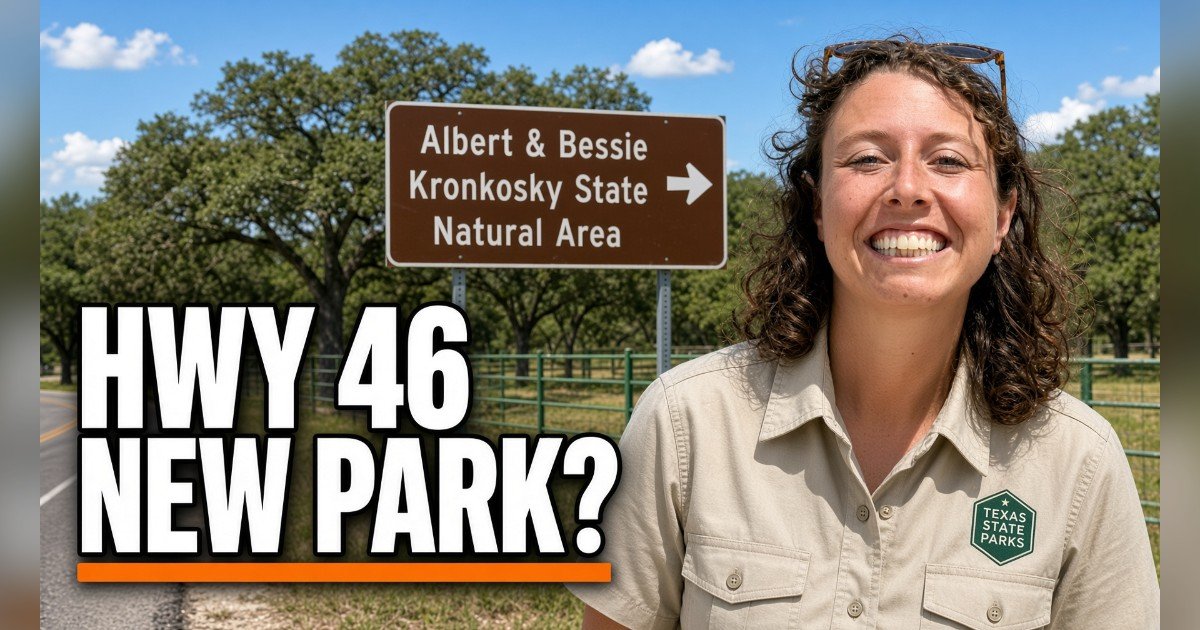
Texas Parks and Wildlife is aiming to open the Albert & Bessie Kronkosky State Natural Area to the public in late fall 2026, according to a recent episode of The Building Texas Show. The 3,814-acre property, which straddles Bandera and Kendall counties along Highway 46 between Boerne and Bandera, will not be a state park in the traditional sense. Instead, it is classified as a state natural area, a legal and operational distinction that carries significant implications for how the land is managed and experienced by visitors.
New site superintendent Stephanie Kwiatkowski, who took the role in June, explained on the podcast New Texas State Park Near Boerne: Why It Isn't a Park | ABK that the designation places ABK on a spectrum between recreation and conservation. While the site will offer 28 miles of multi-use trails for hikers, mountain bikers, joggers, and strollers, the natural-area status prioritizes protecting the landscape over maximizing visitor amenities. That matters because the property safeguards a viewshed that Kwiatkowski says is secured permanently: the site owns both sides of the canyons, ensuring that the scenic corridor remains undeveloped.
The ecological stakes are high. ABK contains bigtooth maples that rival those at Lost Maples State Natural Area, riparian corridors along Red Bluff Creek and Pipe Creek, and transition zones between ash juniper woodlands and creek bottoms. These features justify the protective classification and make the site a significant addition to Texas's conservation estate. The decision to classify ABK as a natural area rather than a park also reflects lessons from other sites such as Government Canyon, Lost Maples, Inks Lake, and McKinney Falls, where varying balances between access and preservation have been tested.
Operationally, the site is still recovering from a July 2026 flooding event that washed out landscaping, trails, and campsites before any public visitation had occurred. Kwiatkowski described the event as an early test of the site's resilience, and the experience is informing preparations for opening. Construction crews, subcontractors, and a six-person site team are now building cabins, screened shelters, tent sites, backcountry camping, and hike-and-bike infrastructure. The volunteer corps assembled by founding superintendent James Rice, a former biologist, remains integral to the site's success, Kwiatkowski said.
The timing of the opening is consequential for the Hill Country, where population growth and development pressure continue to fragment open space. A new natural area between Boerne and Bandera offers a counterweight to sprawl, but its conservation-first model means public access will be carefully managed. Kwiatkowski's own path—from childhood camping trips to roles at Lost Pines Complex and Pedernales Falls State Park—underscores the operational expertise being brought to bear. For listeners and residents, the episode provides a rare preview of what the site will offer and why its designation matters. As Texas adds millions of new residents, the ABK model may become a template for how the state balances recreation demand with the protection of fragile landscapes.