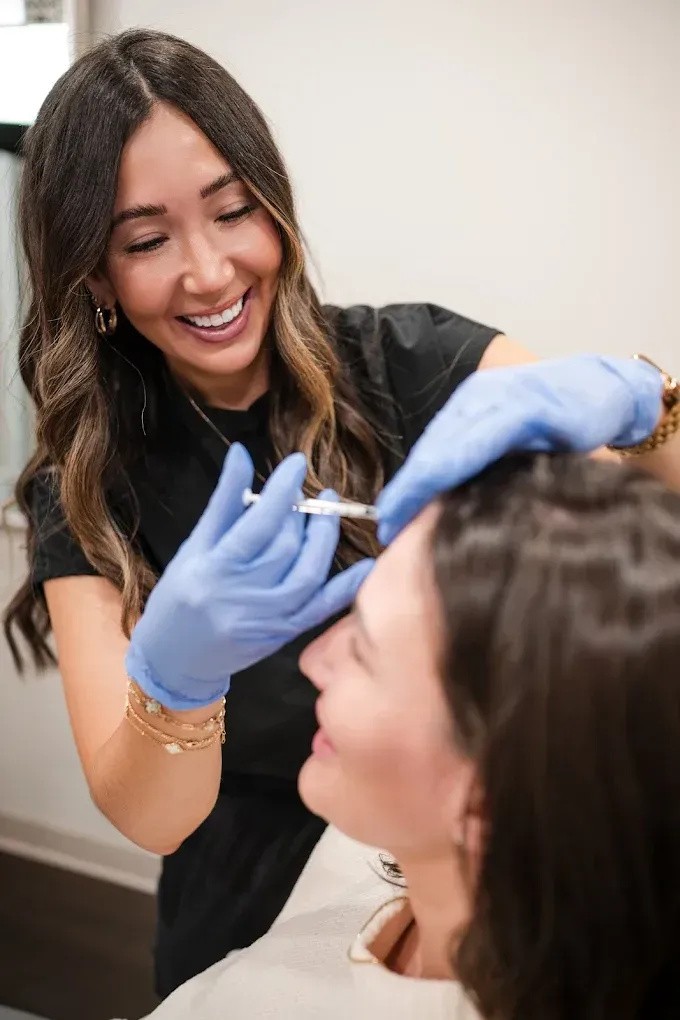
As injectable treatments continue to grow in popularity, the risk of an overfilled or stiff appearance remains a primary concern for patients. According to Anne Therese Aesthetic Medicine, this outcome is not an unavoidable consequence but rather a result of specific clinical decisions regarding volume, product selection, and anatomical placement. The practice, which operates under physician supervision in Lewis Center, Gahanna, Cape Coral, and Bonita Springs, has detailed its approach to achieving subtle, natural-looking results.
Natural-looking injectable outcomes depend on matching the volume, product properties, and placement to each patient's unique facial anatomy. Overfilled appearances typically occur when too much product is placed in a single session, when the selected filler's physical characteristics do not match the treatment area, or when filler is injected without considering the balance between facial compartments. In contrast, Botox overshoot follows a different mechanism. Neuromodulators work by blocking nerve signals that cause targeted muscles to contract. When the dose is excessive or injection sites fail to account for expressive muscle anatomy, the result can be restricted movement rather than softened dynamic lines. The clinical objective is preserved expression with reduced line depth, not immobilized facial movement.
Hyaluronic acid fillers vary significantly in their physical properties, and product selection is a critical part of the clinical plan. For instance, fillers designed for structural support in deeper tissue planes, such as Juvederm Voluma XC for mid-face volume, have different rheological properties than those formulated for superficial refinement, like Juvederm Volbella XC, which is often used for lip border definition. Placing a high-resistance filler in an area that requires soft, natural movement can produce visible rigidity. The licensed providers at Anne Therese Aesthetic Medicine select products based on the anatomical zone, depth of placement, and the patient's existing tissue composition. Volume calibration follows the same principle: adding filler to one area without considering adjacent compartments can shift facial proportions in unintended ways. The practice emphasizes incremental refinement rather than maximizing volume in a single appointment.
The consultation serves as the clinical starting point for natural-looking results. During this in-person meeting, providers review facial anatomy, treatment history, and patient goals before recommending any product or dose. For first-time patients, the consultation includes an explanation of how each treatment works, what realistic outcomes look like at various volume levels, and what the follow-up process entails. Anne Therese Aesthetic Medicine applies a conservative starting point as a clinical standard. Providers begin with lower doses and assess results at appropriate follow-up intervals before introducing additional product: 10 to 14 days for Botox, and two to four weeks for dermal fillers. This approach allows patients to observe how their anatomy responds and make informed decisions about further refinement, rather than discovering that excessive product was placed during a single visit.
Patients seeking natural-looking injectable results are encouraged to schedule a consultation at one of the practice's locations in Lewis Center, Gahanna, Cape Coral, or Bonita Springs. For more information, visit Anne Therese Aesthetic Medicine.