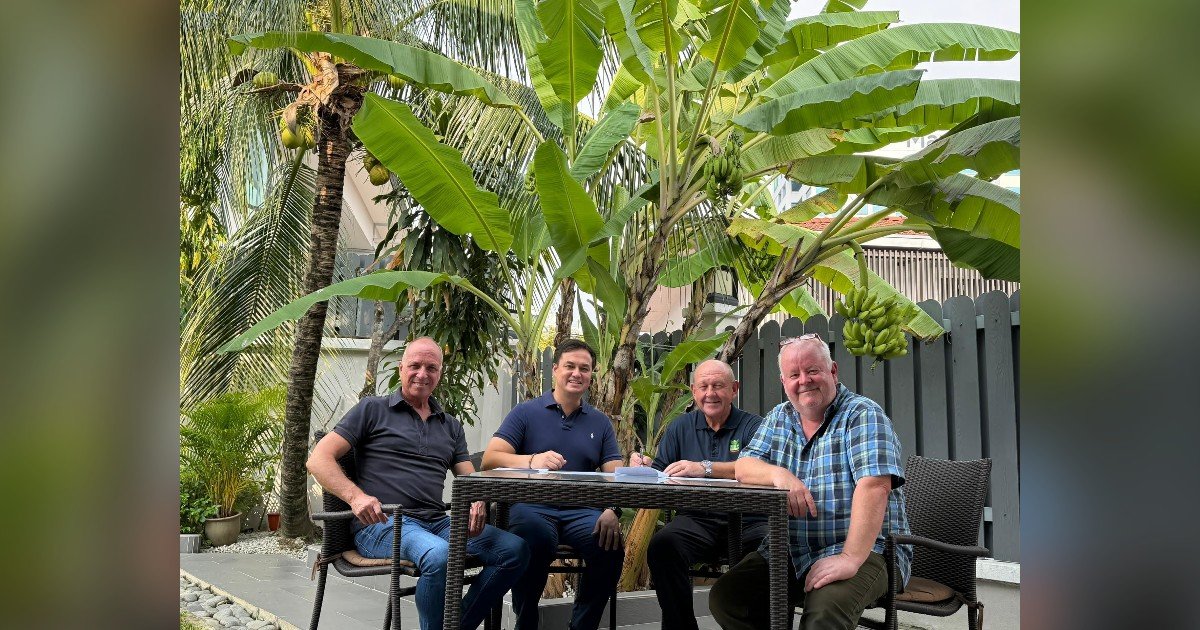
Phi Earth Technologies and Sana Fortis have launched a pilot program in Singapore and Malaysia to develop regenerative fuel systems, combining fast-growing trees and grass to produce biomass for energy and industrial use. The initiative integrates Phi Earth's Phi Trees™ (enhanced Paulownia) with Sana Fortis' HTG Grass, a high-yield crop used in bioenergy and livestock systems, to create a dual-output platform that can support multiple value chains from renewable energy to carbon-linked materials.
The partnership marks a key step in translating regenerative agroforestry into real-world applications, as industries seek alternatives to fossil fuels. By combining Phi Earth's bio-digital technology with Sana Fortis' agronomic expertise, the pilot aims to optimize productivity while restoring soil health. The companies will test how integrated systems can improve land-use efficiency and create commercially viable agricultural models.
"Our focus has always been on building high-performance tropical crop systems," said Simon Denby, Head of Agronomy at Sana Fortis. "Working with Phi Earth allows us to extend that into integrated models that improve productivity while strengthening long-term resilience." Theo Davies, Founder of Phi Earth, added, "This pilot is about rethinking how land can work harder and more intelligently. By combining our approach with Sana Fortis' expertise, it changes how biomass, energy, and agriculture come together."
Under the memorandum of understanding, Sana Fortis will provide land access, field operations, and local inputs, while Phi Earth will deploy its proprietary Phi Tech™ platform, including biological treatments, technical protocols, and monitoring systems. Both parties will collaborate on pilot design, execution, and data analysis to ensure robust results. The collaboration also allows for potential expansion into additional crops, supporting broader application across Southeast Asia's agricultural landscape.
HTG Grass was selected for its rapid growth and versatility across biomass markets, including bioenergy, silage, and soil regeneration. When paired with Phi Trees™, the system is expected to create a scalable platform capable of delivering consistent biomass supply while supporting long-term environmental sustainability. As demand for sustainable biomass and regenerative agriculture solutions accelerates globally, this partnership positions Phi Earth and Sana Fortis to develop next-generation feedstock systems that align productivity with climate and land restoration goals.
For more information about Phi Earth Technologies, visit https://phiearth.com/.