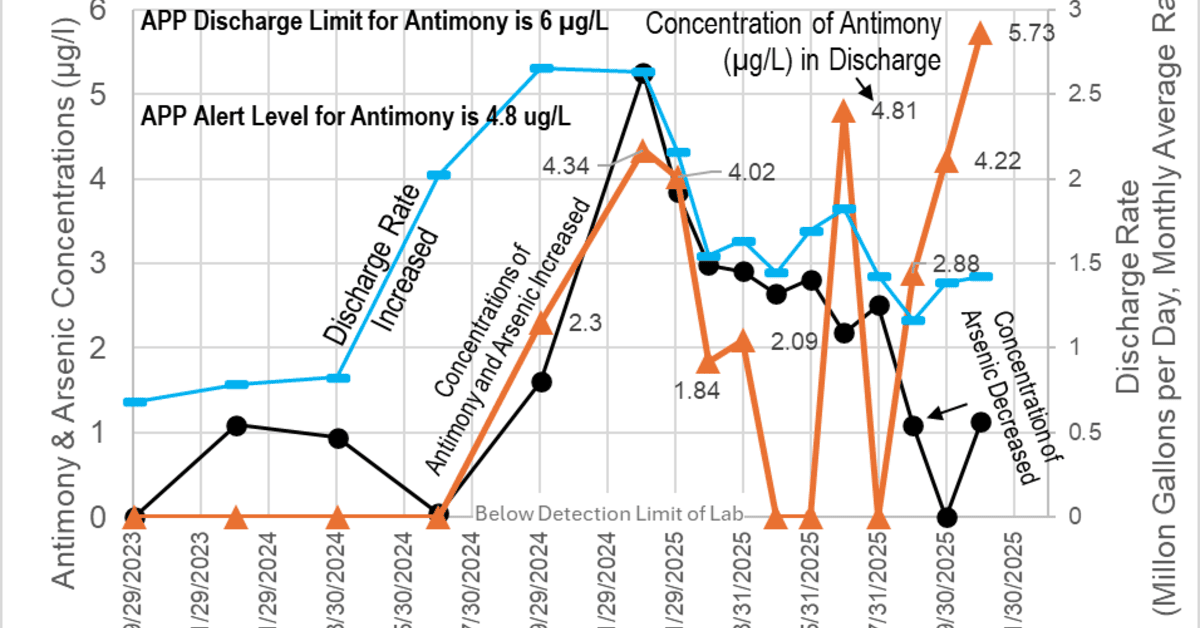
A recently reported water quality sample from the South32 Hermosa Mine discharge near Patagonia, Arizona shows the highest antimony concentration recorded to date, exceeding Arizona’s Aquifer Protection Permit (“APP”) Alert Level and approaching the state’s regulatory discharge limit. According to EPA-reported Arizona Pollutant Discharge Elimination System (AZPDES) data, the October 31, 2025 sample measured 5.73 micrograms per liter (µg/L) of antimony – above the state Alert Level of 4.8 µg/L and just below the APP discharge limit of 6 µg/L.
This reading is significant because APP rules require a 30-day study whenever an Alert Level is exceeded, and because the result reflects an observable upward trend in reported antimony concentrations as discharge flows have increased over time. Based on the upward trend, community members are concerned that current antimony concentrations exceed 6 µg/L, as there is a 30–60 day gap in reporting to the public after samples are collected.
To support public understanding, volunteer scientists have compiled publicly reported discharge monitoring results into a chart summarizing concentrations of antimony and arsenic alongside the mine’s reported discharge flow rates. The chart illustrates a pattern in which higher flow rates above one million gallons per day (MGD) correspond with higher reported metal concentrations. Data suggests the treatment process was adjusted resulting in a decrease in arsenic concentrations, however antimony remains an issue. The public has requested the ADEQ provide results of the October 31 APP sample, but this process is anticipated to take several weeks.
Issues with the treatment plant were anticipated, as the treatment plant is unique in construction. Data suggests that even at relatively low flow rates (1-2 MGD), the treatment plant appears deficient in reducing antimony concentrations below permit standards. This deficiency raises concerns as discharge rates are anticipated to increase significantly as the mine develops.
The public is also concerned about potential groundwater impacts from this discharge, as existing dry contaminated sediments are saturated. Water levels in the aquifer along Harshaw Creek and in the Town of Patagonia aquifer are anticipated to rise due to discharge in Harshaw Creek. The watershed is recognized as a highly mineralized area with abandoned mines where Harshaw Creek flows into the Town aquifer. The Town of Patagonia relies on groundwater as its sole source of water, with significant contribution from the Harshaw Creek watershed even before mine discharge. The potential for groundwater contamination has not been sufficiently analyzed and is not monitored or regulated by the State of Arizona.
"The antimony in the discharge issue is likely the first example of deficiencies by the mine and regulators to protect human health and the environment. Even with assurances from South32 and regulators, will the air treatment system be as deficient as the water treatment plant? Will the Town aquifer be contaminated? Environmental monitoring by the public is key to better understand the issues, respond to these issues, and hold South32 and regulators accountable," said Chris Gardner, hydrologist and scientific advisor to local residents.
The South32 Hermosa Mine’s long-term plans include pumping millions of gallons of groundwater per day to support mining operations. Community members note that a large portion of this water is expected to be discharged after treatment, raising questions about potential long-term impacts on both water quantity and water quality in the Patagonia region.
"Harshaw Creek is a lifeline for drinking water, irrigation and wildlife in Santa Cruz County. With drought already straining our aquifers, South32's unchecked discharges risk bioaccumulation in downstream wells, lakes and the Santa Cruz Active Management Area," said Robin Lucky, President of Calabasas Alliance.
Antimony is a toxic mining byproduct that poses severe health risks at these levels. The U.S. Environmental Protection Agency (EPA) warns that chronic exposure through drinking water can lead to gastrointestinal issues, respiratory problems, headaches, dizziness, eye irritation, sleep disturbances, and organ damage. High exposures are linked to stomach cancer, cardiovascular disease, and metabolic disorders.
"The people of Patagonia and Lake Patagonia have lived for nearly a decade with deep uncertainty about how this project may affect our shared water resources," said Ms. Lucky. "All we are asking for is clear information, timely reporting, and an honest accounting of what the data show. Water is central to the health, prosperity, and very survival of our community - transparency is essential."
Lucky added, "This is a crucial moment for trust building in our community. When reported concentrations exceed state thresholds, the citizens of Santa Cruz County deserve to know promptly and understand what steps are being taken to protect them."