As temperatures rise across West Michigan this spring, homeowners are discovering the toll that another harsh winter has taken on their garage floors. Freeze-thaw cycles — where moisture seeps into concrete pores, freezes, expands, and then thaws — are among the most destructive forces acting on residential concrete surfaces, and the damage often goes unnoticed until warmer weather arrives. According to a peer-reviewed study published in the journal Materials in September 2025, concrete can lose up to 37.7 percent of its compressive strength after repeated freeze-thaw cycles, making spring inspections critical for homeowners across the region.
Nathan Endres, owner of Premier Edge Concrete Solutions in Grand Rapids, says the weeks following the last frost are when most homeowners first spot the warning signs. "Every spring, we get calls from homeowners who walk into their garage and notice new cracks, pitting, or flaking that was not there in the fall," Endres said. "What they are seeing is the cumulative effect of water getting into the concrete all winter long. The sooner you address it, the less expensive the fix."
The mechanism behind freeze-thaw damage is straightforward but relentless. Water enters the concrete through hairline cracks, pores, and surface imperfections. When temperatures drop below 32 degrees Fahrenheit, that water freezes and expands by approximately 9 percent in volume. This expansion creates internal pressure that widens existing cracks and creates new ones. Deicing salts compounded the problem by lowering the freezing point of water unevenly, causing differential stress that accelerates spalling.
Spring offers a narrow but important window when conditions are ideal for concrete assessment and repair. The ground has thawed, moisture levels are stabilizing, and temperatures are rising into the range where coatings and sealers can be properly applied — typically above 50 degrees Fahrenheit. Endres recommends homeowners conduct a thorough garage floor inspection as soon as spring temperatures stabilize. Key warning signs include hairline cracks wider than a quarter-inch, surface spalling, white powdery deposits known as efflorescence, and soft or crumbly areas.
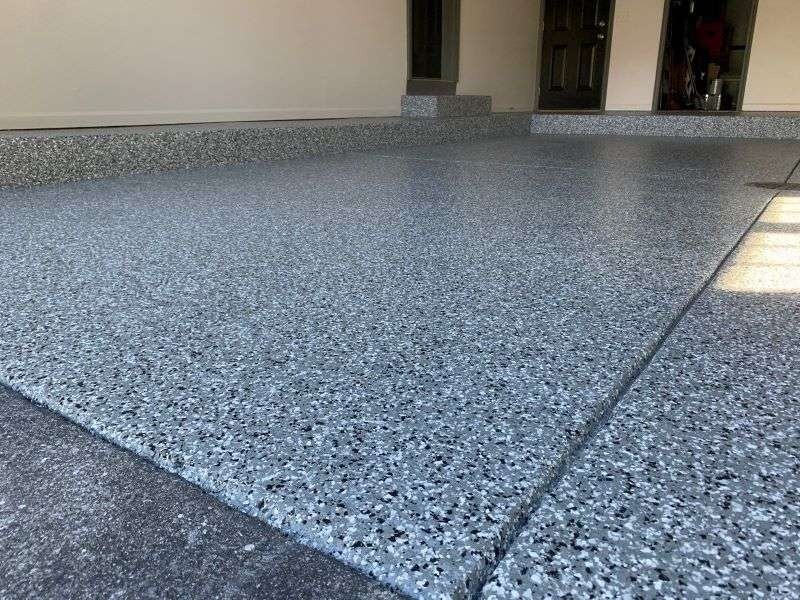
A growing number of homeowners are choosing professional help for these projects. According to a February 2026 report by CivicScience, 40 percent of homeowners now plan to have a professional handle renovation work entirely. Professional-grade solutions for garage floors typically involve diamond grinding the concrete surface, applying a moisture-mitigating primer, and finishing with a multi-layer coating system. This differs significantly from retail epoxy kits that rely on acid etching, which often leads to coating failure within a few years. A professional garage floor coating in Grand Rapids includes an industrial epoxy or polyaspartic base coat, decorative flake broadcast, and a UV-stable polyaspartic top coat that resists chipping and peeling.
"The coating does more than make the floor look good," Endres noted. "It creates a seamless, impermeable barrier that prevents water and salt from penetrating the concrete. That is what stops the freeze-thaw cycle from causing damage in the first place." Homeowners not ready for a full coating can still take protective steps: clean the floor with a pressure washer, fill cracks with patching compound, and apply a penetrating concrete sealer. For those considering a permanent solution, spring and early summer are ideal for scheduling a professional assessment. Contractors can evaluate damage, test for moisture vapor transmission, and recommend appropriate coating systems.